The rise of digital technology has caused an explosion of data in recent decades. Soon it reached such proportions that we spoke of big data. Fortunately, the computing power of personal computers and cloud solutions developed at a similar pace. With smart algorithms and analytics, we could recognize patterns in big data, and act on them. Whole new markets emerged, think streaming services like Netflix and Spotify, or platform economies like Uber and Airbnb. However, by now every organization can benefit from analytics to some degree, if only to optimize business processes based on patterns invisible to the naked eye.
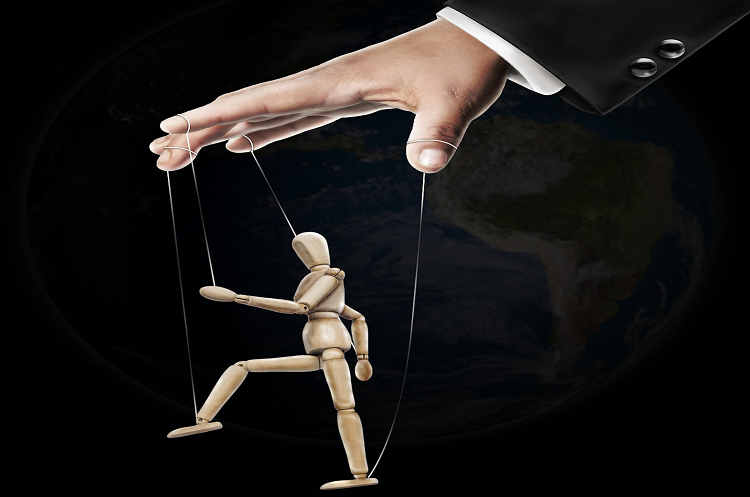
My own background is in the personnel domain, the Human Resource (HR) department, and here, too, data and analytics have been increasingly discussed in recent years. Stated flatly, HR management encompasses attracting, developing, motivating, and retaining personnel as effectively and efficiently as possible. On the one hand, human capital is expense item No. 1 at many companies. On the other hand, the knowledge, experience and motivation of staff members can make the difference between a successful or poorly run business. Data-driven and optimization within the HR domain can thus provide value for any organization, regardless of the data-driven business model.
People analytics
People analytics, workforce analytics or HR analytics. That's what experts call the use of data, statistics, and quantitative analysis to make decisions within the HR realm. The media are full of developments in this area. Through people analytics, any organization could figure out and predict from its HR data:
How best to recruit new staff;
Which applicants are the best fit for the job;
Which staff members should be on which training courses;
How to recognize and reward good performance;
How to stimulate and accelerate career paths, and
How to ensure employees stay healthy and motivated at work.
Ethical Issues
However, when people analytics is applied in practice, one does quickly run into difficult ethical issues. Issues that relate to how we may collect, process and use data to inform decisions about people.
For example, how do we measure employee performance, and is that data accurate and valid enough for analytics? And how do we ensure that our analytical models do not discriminate on age, gender or ethnicity? Such discrimination, whether unnoticed or not, will often be present in the (historical) data with which we feed models.
Alternatively, we need to look at data privacy and ownership. Are organizations justified at all in using historical employee data for analytics? Was this purpose stated at the time of data collection? How do we handle the data of employees who do not want their data used for people analytics? And should we notify employees if our data-driven models predict that they have low leadership potential, or predict that they will leave the organization?
Prediction models present further problems. People analytics allow organizations to predict in increasing detail how employees will behave in the future. Imagine, for example, if your employer could predict how much work stress you suffer and the extent to which you are at risk of burnout. Would your employer:
may predict;
should be prohibited from predicting that, or
should be required to predict, prevent, and share that with you?
What would we consider an acceptable accuracy for such prediction models, 80%, 95%, or 99.9%? How do we think about false positives (incorrectly predicted burnouts that do not occur) and false negatives (non-predicted burnouts)? What data may or may not organizations use if they could use that data to generate benefits for employees?
Integration into business processes
In other management functions, analytics tends to be a part of business operations. For example, when it comes to marketing and customers, the use of prediction models is relatively common. With random sampling, we innocently test whether ad A or ad B will entice the customer to make the most sales.
However, when it comes to an employee, we quickly end up in an ethical and legal, (dark) gray area. If we do not know whether the employee will benefit more from training A or training B, may we run trials and randomly assign employees to trainings? And what if the training is not training but career steps, are we still allowed to test the effect experimentally? What if career step B seems like the logical choice, but a data-driven prediction model recommends career step A with 80% certainty? It's an ethical minefield when we start testing such impactful HR decisions with, or making them based on, analytics.
Nudging
But now what if we don't predict individually, but if analytics show that policies are almost certainly going to lead to improvements for the workforce as a whole? Take this example at Google: through people analytics, they found that small changes in the cafeteria could cause employees to exhibit healthier eating habits. Among other things, smaller plates would cause employees to eat less, and by color-coding snack containers with colors, employees were more likely to opt for healthy snacks. Such techniques are called nudging: small nudges that "trick" people into exhibiting good behavior.
Positive news, right? Immediate implementation? As far as I am concerned, it remains a complicated matter. Who decides what "good" behavior looks like? Is it really up to organizations to influence employee eating behavior? Where is the limit of what organizations are allowed to influence? Are people not free to choose their own behavior? Or should organizations instead help employees with such choices, and is nudging good employment practice?
More questions than answers
This article is full of questions that, despite four years of doctoral research, I do not have unequivocal answers to. What I do know is that within organizations we are collecting more and more data on human resources, and that we can and should create immense value with it. What remains is to find the implementations that can provide benefits for both employers and employees. But be prepared: every question you will try to solve with smart data analysis will only bring more difficult questions.
This article can also be found in the Privacy in the Workplace file