Health apps are programs you can install on your smartphone, tablet or PC that allow you to track yourself, or with sensors, how healthy you are and live. Using these apps promises benefits for both individual users and society. After all, care can become more efficient, better and cheaper. But there is also much uncertainty about the quality of health apps, such as data reliability, algorithms and user privacy.
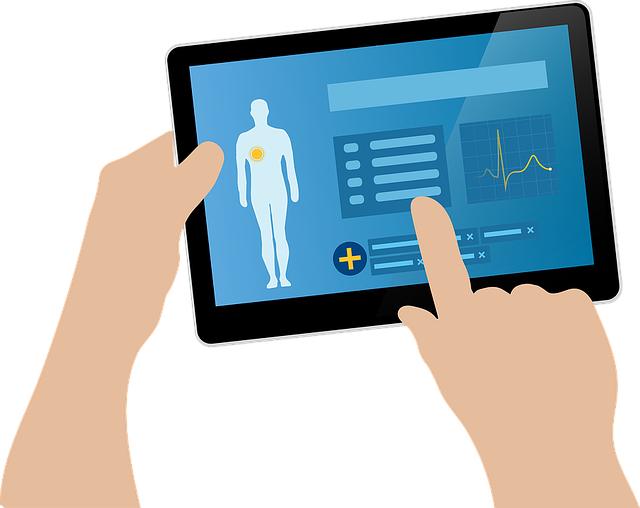
Health apps track how healthy you are and live with data or sensors.
Healthcare can become more efficient, better and cheaper thanks to health apps.
But there is also much uncertainty about the quality of health apps.
Health apps are programs you can install on your smartphone, tablet or PC that allow you to track how you live yourself, or with sensors. These apps record data about your lifestyle, activities, well-being or health throughout the day. Most people use the apps on their smartphones, first because it is easier, but also because a smartphone has built-in sensors.
Many apps promise users personalized advice on lifestyle and health. Most of these apps are for general use; for example, as a woman, you can track your menstrual cycle through an app like Glow or Menstrual Calendar and discuss it with a health care provider. There are also specific health apps for patients, including apps for chronic diseases, such as the MS Sherpa app. This app gives MS patients insight into their own disease progression based on medical and lifestyle values.
The health apps promise that you can take control of your health and lifestyle by measuring and monitoring how much you exercise or eat, for example, or what your blood glucose level is. If things could or should be better, according to the health apps, you can do something about it right away. With the idea that this way you can live healthier (at home) for longer.
Health apps are increasingly trying to motivate users to modify their behavior based on personalized advice. To do so, they monitor users based on self-entered and/or sensor-measured data. The software then evaluates the measured values against norm values. The app thus "gets to know" the user and then, based on analysis of the data, provides "personal" advice to change behavior. The user then receives advice for behavioral changes such as "stop doing this or that," or motivations such as, "keep it up! Health apps can do things this way:
provide insight into whether a specific personal goal was met ("exercise more" or "experience less stress");
Support in changing overall lifestyle toward healthy behaviors ("improving fit score");
give a patient immediate insight into their health status.
Provide a patient with data, with which to engage in conversation with the health care provider
The use of health apps in healthcare and in the personal domain has a major impact on the organization of care and on citizens themselves. Patients are taking on tasks within the health process that they did not have before. Thus, they become suppliers of self-generated data to organizations or companies without having a grip on it.
Healthcare professionals are concerned about this. For example, they wonder how they can still see or judge whether the reports they receive are of good quality. Are they still reliable enough to give an opinion or make a decision?
For consumer apps, it is difficult for users to understand underlying standards of health, data quality and analytics. For example, in our Health Central study, we examined the StressCoach app, SamenGezond app and the MS Sherpa app. The StressCoach app and MS Sherpa app indicate that they are based on scientific research and thus offer good quality personalized advice. In the case of the TogetherHealth app, this scientific foundation is less evident. Moreover, it is not easy for users to check how the health apps handle the quality, reliability and privacy of data.
Consumers and patients need additional information; about what the app does, how the app arrives at an advice and what information that advice is based on.
In our Health Central report, we show that there are initiatives to get a better grip on the quality, reliability and privacy of health apps. For example, for consumer apps, there are the GGD Appstore and the NeLL (National eHealth Living Lab).
The GGD Appstore provides an overview of what they believe are reliable and effective health apps. Apps are tested for user-friendliness, reliability, substantiation and privacy. It is striking that apps are included in this GGD-Appstore when the provider of the app is honest about, for example, the commercial purposes of the data use, and when the verdict on privacy is 'sufficient'.
In the NeLL which, founded by Niels Chavannes, professor of e-health applications at LUMC, among others, digital health tools such as apps, as well as sensors, wearables and robots, can be tested for reliability.
The KNMG medical app checker provides frameworks for assessing the quality of medical apps and aims to encourage responsible use by physicians and patients.
No. Unfortunately, these initiatives, such as the GGD appstore or the NeLL, often do not work well enough (yet) to cover the entire market. They are too fragmented and focus on a limited number of evaluation criteria. Moreover, these criteria by which different services are evaluated as "safe" and "trustworthy" are not very transparent to users. Moreover, NeLL and the GGD Appstore can only advise. They cannot take action when apps do not meet quality standards, except to not include them in the overview.
Who will enforce in this market is also not clear (yet).
Existing initiatives, such as the GGD Appstore and NeLL, are a promising first step. They can provide greater transparency around the quality and reliability of health apps and the data being shared. But to give people confidence that the chain of generating, accessing, sharing and using health data in health apps is in order, agreements and oversight are needed.
Consider, for example, requiring health app developers to provide insight into how they ensure the quality and reliability of data (for example, when self-collecting via an app) and analysis of that data. That means not only a seal of approval (such as the CE mark for medical apps) when required, but also an explanation that is clear to the user, for example about the medical metrics applied or the use of (self-learning) algorithms.
Also, the status of organizations such as NeLL and the GGD Appstore and how they complement labels such as the CE mark, and oversight from, for example, the Health and Youth Care Inspectorate (IGJ) and the Autoriteit Persoonsgegevens (AP), needs to be clearer.
Report: Health Central
This article can also be found in the Privacy in Healthcare file
source: Rathenau Institute