
Fake news and privacy: the two, of course, have everything to do with each other. This is related to the fact that privacy is inseparable from human dignity. The first article of the European Charter of Human Rights states, "Human dignity is inviolable. It must be respected and protected." In my valedictory speech on how innovation can infringe on jurisdiction and human dignity, I came to the conclusion that human dignity functions as the basis of personality rights. And because having human dignity implies a personality right, the collection of data about a person by Internet service providers should be seen in the context of human dignity. (1)
Part of that human dignity is that, as a citizen, you can arrive at a true and informed opinion about what you think is important and that that forming of that opinion can take place as unspoiled and uninhibited as possible.
That the latter is not always unproblematic, I will try to illustrate with two events from my own life. In January 2017, I was in Valencia and visited the exhibition FAKE: No es verdad, no es mentira (FAKE: It's not true, it's not a lie). What hit me there was how easily we assume things to be true when they demonstrably are not. This had become very clear to me before, namely during my time as a volunteer at the Legal First Aid in Tilburg. In the spring of 1982, one of the volunteers went cycling in the United Kingdom (UK) just before the Falklands War began on April 12. He would cycle around the UK for about six weeks. Upon his return, it became apparent that any relativization regarding the colonial power exhibited by the British was beyond him. Immersed as he was in the British media, the volunteer fully understood why Thatcher had protected the country from invasion by the Argentines. On this subject we no longer took him seriously, which affected him deeply.
The connection between human dignity and privacy was recognized in Germany as early as 1954 by the federal court in the so-called Leserbrief ruling. In that ruling, the judges derived a fundamental right to human dignity from the right to privacy and the right to be able to develop one's own personality. The purpose of this right to human dignity is to adequately protect the attributes of the natural person. This includes inviolability of the body and home, but also inviolability of the data collected about you and the right to manage it as part of the right to privacy. Since this ruling, the general right to personality and human dignity have been inextricably linked. The European Union has incorporated human dignity into its legislation, recognizing the importance of this right.
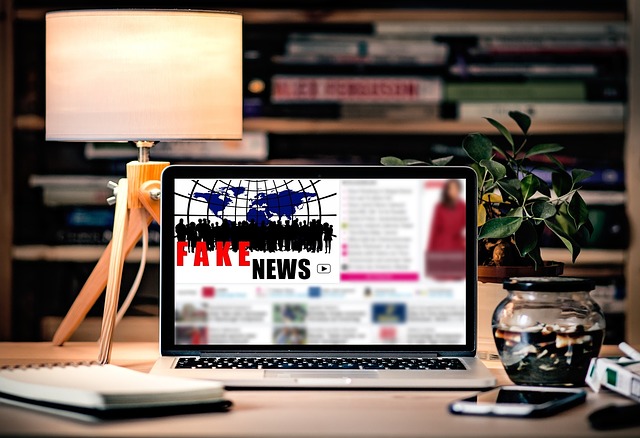
To further clarify the relationship between fake news and the right to privacy, as part of human dignity, first just what I will mean by fake news, retrieved from government information Disinformation and fake news (2): "Fake news can take several forms. One example is disinformation: untrue or inaccurate information deliberately created and disseminated to make money. Or to damage someone, a group of people, an organization or country. Then the sender has bad intentions."
The crucial elements:
Concealed news;
Dissemination through websites, social media and traditional media;
Goal: influence public opinion or profit.
The definition of the right to privacy in Article 10 of our own Constitution is not so bad:
Everyone, subject to limitations to be established by or under the law, has the right to respect for his privacy.
The law establishes rules to protect privacy in connection with the recording and provision of personal data.
The law establishes rules on the rights of individuals to access data recorded about them and the use made of such data, as well as to correct such data.
The crucial elements:
Respect for personal privacy (including the data collected about you);
Subject to legal limitation.
Article 10 establishes the relationship between where I can know myself "unobscured and uninhibited" (paragraph 1) and the collection of data about me (paragraphs 2 and 3) very nicely.
By moving around the Internet with any device, you leave digital "traces. Traces of which you are aware: your conscience traces (after all, you said okay to the 'imposed' conditions). But in addition, many digital traces of which you are not aware: your unknowing traces. These traces are collected extremely fanatically through the five big pushers: Google, Amazon, Facebook, Apple and Microsoft (GAFAM). They use numerous data collectors for this purpose, such as Cambridge Analytica. These data collectors add something to the data (e.g., "consumer association member," "SP member") and resell it to anyone who wants to buy it. The enriched traces are used by algorithms to show you 'relevant ads' (this combination of words deserves an analysis for which, unfortunately, there is no space here) including opinion ads and funny movies. You are being "spied on.
If a message addressed to you is the same every time, you're going to skip it. A pusherman doesn't want that, so he makes sure that every next message is just that little bit nicer, sharper, more sensational, and thus appeals more to what you consider "relevant. Thus the pusherman contributes to your view shifting imperceptibly and slowly. By spying and influencing you are no longer open-minded.
GAFAM makes you keep coming back to pushermen. They have (too much) interest in getting us addicted. Addiction makes us impervious to reason, because the one who criticizes comes between you and your addiction. If the one who supplies you with your drug is criticized by another, your addiction causes you to "believe" the one who supplies you with the drug more than the one who criticizes you. (3)
When your tracks and the dormant increasing power of others over your open-mindedness are merged and the pusherman can create with an advertiser the certainty of your guaranteed attention, there is no longer a well-informed citizen, but rather a dependent user along the lines of the addiction mechanism who is inclined to believe everything the pusherman has put in front of him. Is it a coincidence that the GAFAM world also speaks of "users"? After all, fake news goes in with you like a drink in a death knell. You are after being spied on, genudged and manipulated.
Our traces are used by algorithms to present us with certain ads and opinion ads (true, half true and/or false) and these are programmed (to keep me hooked) in such a way that they push me further and further in a certain (wanted by me, according to the pushermen) direction. But we are not allowed to know how these algorithms work. What we do know now is that these algorithms have a bias (bias) aimed at keeping me addicted.
Is the answer to fake news then to program algorithms that can recognize and remove fake news within the services provided by GAFAM as they present to us? Of course, again, we are not allowed to know how these work. The suggested solution is worse than the malady. And so I don't want to pay any further attention to it here.
So how do we solve this? Part of the solution lies in the way our freedom of speech was formulated as early as 1798 (incidentally, fake news, called gunfire, was also extremely prevalent at that time), then included in Article 16 Freedom of the Printing Press. This stated that the person responsible for the text (publisher, printer or writer) had to be mentioned with the text. The same should now be required with every advertisement.
Another part of the solution lies in continually educating the citizen, the user, as is already being done carefully through public campaigns. And, of course, there should be constant attention to it in education. Within this, much attention should be paid to learning to go back to the source from which the (fake) information originates.
My conclusion: fake news robs us of our human dignity and open-minded opinion forming, both inseparable from our right to privacy.
(1) https://research.tue.nl/nl/publications/innovation-less-jurisdiction-and-human-dignity
(2) https://www.rijksoverheid.nl/onderwerpen/desinformatie-nepnieuws
(3)




