Mobile telecom providers must do their best to transmit "as complete data as possible" to emergency number 112. Furthermore, the emergency number must be reachable through all techniques that providers use for normal phone calls, both current and future.
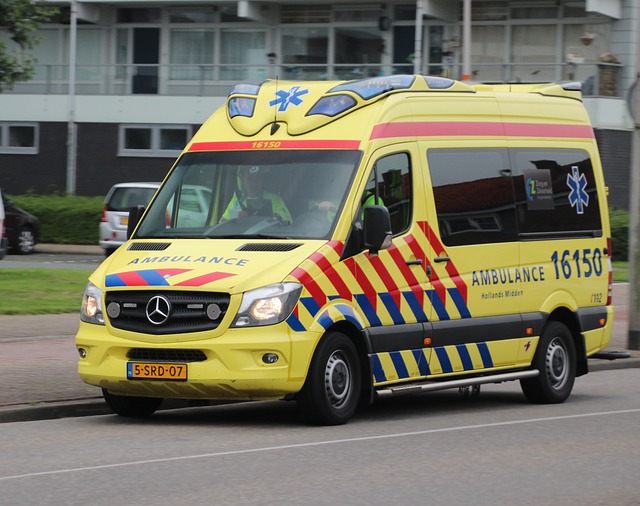
So writes the Autoriteit Consument & Markt (ACM) in a document on new policy rules. With this, the market regulator looks ahead to the future in which 5G, Internet of Things (IoT) and other emerging technologies will play an important role. In the report, the ACM provides advice on how emergency number 112 will remain reachable or 'dialable' in this scenario. For now, this is a draft version of the new policy rules.
112 is like car insurance: it's good that it's there, but you hope you never have to use it. Those who call the emergency number via their smartphones are usually connected to the emergency center via the 2G or 3G network. That will become a lot less in the coming years as these networks are replaced by 4G, 5G and WiFi networks. To make it clear to telecom providers how they should make and keep 112 reachable in the future, the ACM has drawn up new policy rules.
Simply put, the ACM says that the emergency number must be reachable "via all methods that consumers can also use to make other calls." For example, if a telecom provider offers "Wi-Fi calling," it should also be possible to use that to call 911. Now this technique is mainly used to call other mobile numbers.
In the draft policy rules, the ACM also describes what data must be sent along when someone calls 911. Location data is one example. Specifically, we are talking about the location of the mast to which the caller's cell phone is connected at that moment. To get a more accurate picture of location, the consumer watchdog says location information from the caller's phone should also be included. If information about the caller's identity is available, it should also be transmitted to the emergency call center. "On the basis of that information, it is clearer to emergency services more quickly where to go," the ACM said.
The regulator notes that most telecom providers now have this information included. This is thanks to a technique called Advanced Mobile Location (AML). This automatically sends your location information when you call 112. This is calculated using transmission towers a cell phone connects to, surrounding WiFi networks, GPS chip and other sensors present in a smartphone. The phone sends a text message to the emergency room containing the phone's coordinates, phone number and IMEI number. AML was introduced by providers last year. We may have to sacrifice a bit of our privacy, but it saves lives.
Finally, in the draft policy rules, the ACM describes which techniques must be used in which order if the emergency number can be called in multiple ways. This is necessary, according to the regulator, because with some techniques less data is forwarded to the emergency center. It is up to mobile telecom providers to prioritize techniques that transmit the most data. This means that calls to 112 are initially made via 2G/3G/4G/5G, with poor mobile coverage switching to WiFi. If WiFi is not available either, then the mobile network of another telecom provider must be used.
As mentioned, these are draft policy rules. The ACM is asking for feedback from providers. They have until June 23 to respond. The regulator promises that the responses will be taken into account when the final policy rules are adopted. These must take effect on Jan. 1, 2021. To realize that, the Telecommunications Act must be amended before that date.