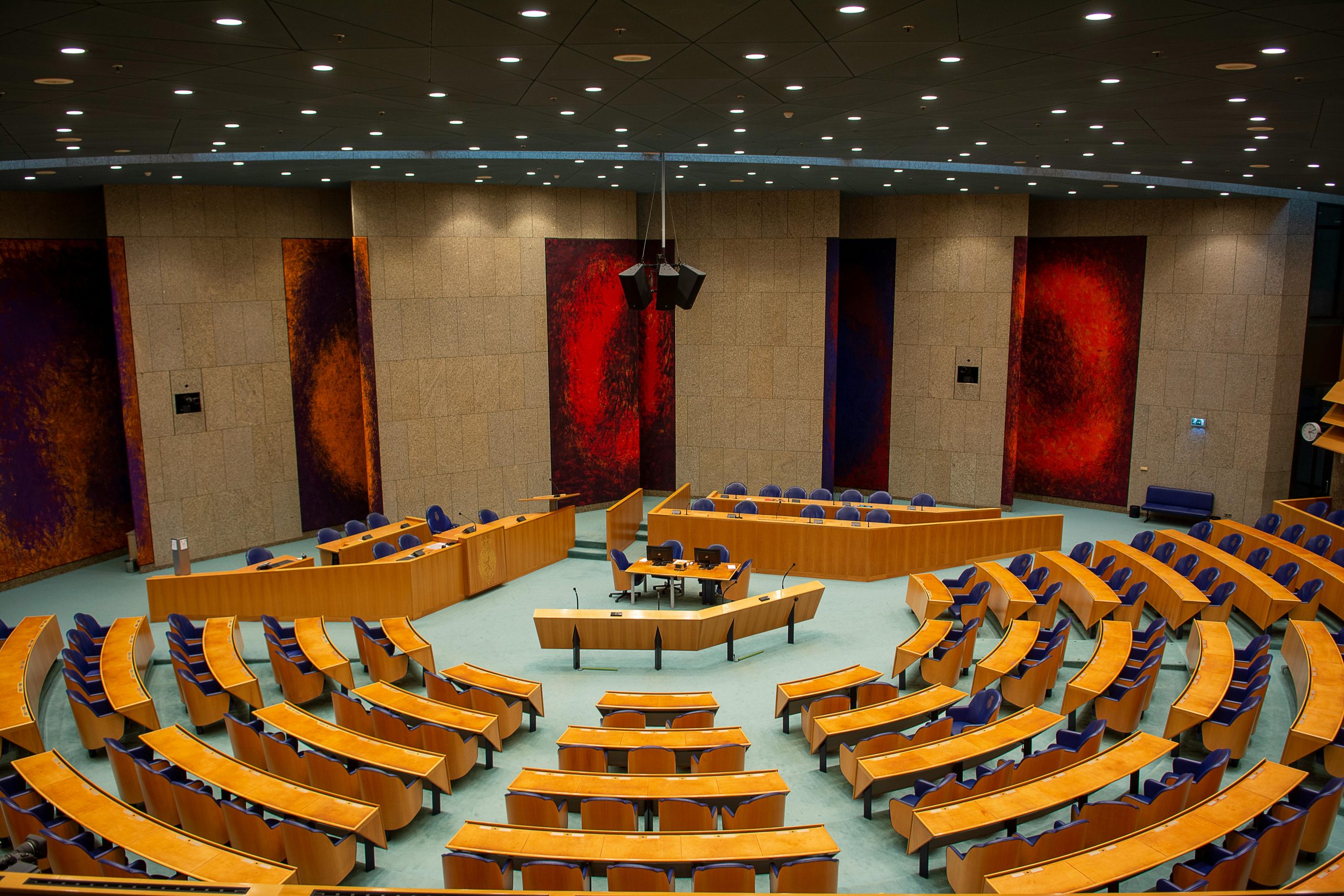
With the coalition agreement entitled 'Getting Started', D66, VVD, and CDA have explicitly opted for an accelerated digital course. The government must become more efficient, safer, and technologically more independent. Artificial intelligence will be given a prominent place, data sharing for security purposes will be expanded, and privacy rules must become easier to apply. However, because the cabinet does not have a majority, the outcome of these plans is by no means certain. For legislation, it will have to seek support from the opposition—in particular from GroenLinks-PvdA and possibly also from JA21.
One of the most concrete proposals is the establishment of a Dutch Digital Service, a compact organization with the power to enforce decisions, which will support digitization across the government and set quality standards. The rijksoverheid standardize the ICT structure, from procurement to systems, and become less dependent on external IT suppliers.
The government also needs to make significant progress in digital services for citizens and businesses. The ambition is to make all government services accessible online and to make digital interaction the standard.
This involves an explicit focus on the responsible use of data and AI within the government. Civil servants must be better equipped to work with technology and AI.
In terms of privacy, the government has opted for simplification. At the European level, it wants to work on revising and simplifying the GDPR, and at the national level, its application must become more practical and enforceable.
In addition, the government wants to make the Open Government Act more applicable. Information management must be structurally improved, with artificial intelligence also being used to better manage document flows.
The aim is therefore twofold: greater transparency, but also less administrative complexity.
In the area of security, the cabinet has opted for intensification. The legal basis for sharing data with private parties must be strengthened in order to identify cyber threats at an earlier stage, with safeguards to ensure that this data does not end up in the hands of foreign powers.
In addition, there will be a new, strengthened Intelligence and Security Services Act, which will be technology-neutral and threat-oriented. Supervision will be consolidated and modernized.
The government explicitly positions cybersecurity as part of national security. Strategic dependencies in cloud and data must be reduced, and the Netherlands must become less dependent on foreign technology companies.
Digitization is seen not only as an administrative tool, but also as an engine of economic growth. The government wants to remove barriers to AI infrastructure and build on the National AI Delta Plan. Within industrial policy, digitization and AI are explicitly designated as strategic domains.
The goal is clear: technological innovation must contribute to productivity, competitiveness, and strategic autonomy in a geopolitically unstable world.
As GroenLinks-PvdA is the largest opposition party, it is evident that the minority cabinet will have to negotiate with this party. Their election program demonstrates that there is overlap on some points, but clear tension on others.
According to its election program, GroenLinks-PvdA is strongly committed to digital autonomy, with data storage under European law, investments in a government cloud, and even a European AI factory. The coalition agreement is partly in line with this.
However, GroenLinks-PvdA takes a tougher stance on privacy and civil rights than the coalition. The party wants to ban the trade in personal data and profiles, ensure that companies record as little data as possible, enshrine digital privacy of correspondence in law, and protect the right to end-to-end encryption. The party is determined to fight proposals for chat monitoring. While the cabinet is looking for ways to simplify privacy rules and strengthen data sharing for security purposes, GroenLinks-PvdA will likely demand additional safeguards and restrictions.
JA21 takes a different approach. The party sees digitization primarily as a driver of productivity and wants to accelerate AI development. At the same time, JA21 places strong emphasis on national sovereignty in data and cloud infrastructure. Cybersecurity is explicitly presented as a matter of national security, and data must remain subject to Dutch law, without access for American or Chinese parties.
This means that the cabinet can relatively easily find support from JA21 for plans relating to digital autonomy and security enhancement, but possibly less so for European integration solutions or extensive supervisory structures.
The cabinet's digital program is ambitious and wide-ranging: from reforming the government and simplifying privacy rules to strengthening cybersecurity and strategic AI investments. But in a minority government, nothing can be taken for granted.
Where the government seeks opportunities to simplify regulations and expand data sharing, opposition parties are likely to demand additional safeguards. At the same time, broad support may emerge on issues such as digital autonomy and AI investments.
The digital course has thus been set on paper, but will inevitably be refined, adjusted, or modified during the parliamentary process.
This article was partially created using AI based on the following sources: