Dutch computer and privacy experts have reservations about the European Commission's plans for a European identity card. On the one hand, it is good that EU member states do not want parties such as Google and Apple to develop a similar means of verification. At the same time, it might be a useful tool for citizens who want to easily arrange all kinds of things across national borders. This is according to a roundup of NU.nl among various experts.
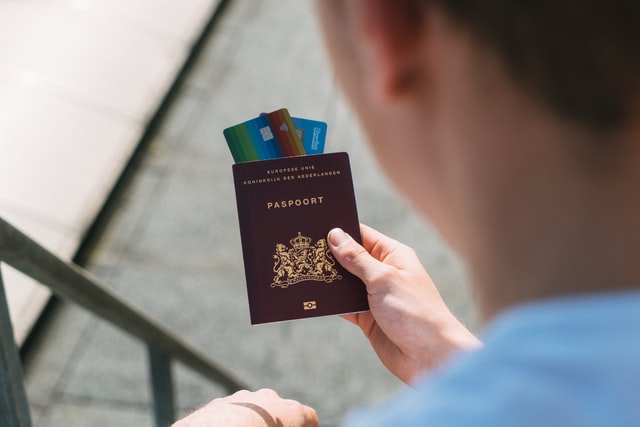
In June 2021, the European Commission laid out plans for a digital European identity card, also known as the EU Wallet or eID. The idea behind this ID is that European citizens can add all kinds of personal documents to it, such as a passport, driver's license or marriage certificate. A waiter can then determine your age, for example. Ordering a beer on the terrace will then no longer be a problem.
The EU-Wallet also allows you to identify yourself at a hotel. Useful if you have made a reservation. It is even possible to add medical data to the wallet. In the unlikely event you stay somewhere longer and haven't packed enough medicine, you can use your eID to get a repeat prescription at the pharmacy.
There are also all kinds of advantages for business owners. With an EU-Wallet, they can do business with government agencies and companies from other EU countries. They can easily prove that they are registered with the Chamber of Commerce. Opening a bank account in another country is also a lot easier.
In political The Hague, there are doubts about the plan. Over two-thirds of MPs are afraid that the EU-Wallet or eID poses risks, such as data theft and identity fraud. Furthermore, MPs fear that a digital European ID would be a serious breach of our privacy. The motion by Don Ceder (Christian Union) -in which the Chamber asked the government not to take "irreversible steps"- was widely supported in parliament.
Minister of Economic Affairs and Climate Micky Adriaansens and State Secretary of Kingdom Relations and Digitalization Alexandra van Huffelen promised to share the concerns of the Lower House with Brussels.
Not only politicians is our country are skeptical about the EU-Wallet. NU.nl approached several experts about the European Commission's proposal. Bart Jacobs, professor of computer security and privacy at Radboud University Nijmegen, does see the advantages of a digital ID.
But he says there are some snags. He thinks the app should be developed open source so that everyone can check how it works, what data is collected and whether there are any security problems. He also sees nothing in a central database where the data of all users is stored. Decentralized data storage-such as on your smartphone-is a better idea in his view. Then your information is private and third parties cannot sneak a peek.
Finally, the Autoriteit Persoonsgegevens should play a prominent role. "People should have somewhere to file a complaint, for example if a party asks for more personal data than necessary. That is prohibited under the AVG anyway, but with an app like this, the danger of that becomes greater," the professor said.
Jaap-Henk Hoepman, associate professor of privacy at Radboud University Nijmegen, emphasizes that the European Commission is in a tricky situation. "If they don't come up with European verification, then Apple and Google are going to implement something like this. That means you are completely dependent on tech giants for digital passports. That's a situation you don't want to end up in," he told NU.nl.
Another risk of a European digital ID, he says, is "overidentification. "With the eID, you make it easy for providers to get information about you. But it is not the intention that they ask you how old you are when you want to send a mail package." Finally, Hoepman says there needs to be an alternative for people who don't want to walk around with a smartphone.
One person who is absolutely opposed to the European Commission's plan is Vincent Böhre, director of the Privacy First Foundation. "We mainly see disadvantages to it. Because of eID you risk having to identify yourself for more and more services. We find that unnecessary anyway."
A privacy-friendly alternative, according to Böhre, is not a wrong line of thought, but certainly not the solution. "Even then, the question remains whether this is not simply a wrong path that we should not want to walk at all as a society," he said.