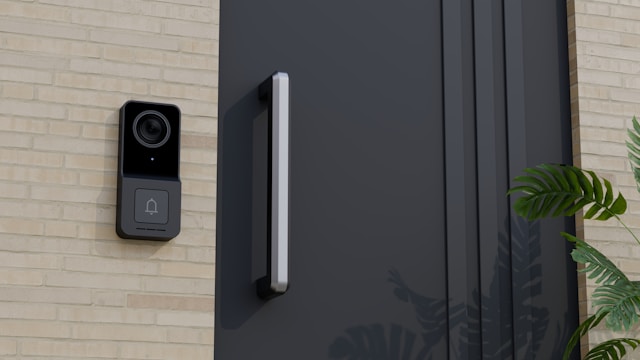
More and more people are using smart doorbells with cameras. There are already more than 1.2 million of these devices in the Netherlands. Because the doorbells also film part of the public space, concerns about privacy and surveillance are arising. The Association of Netherlands Municipalities (VNG) commissioned a study into what municipalities can do about this.
Advisory report on smart doorbells (PDF, 1.1 MB)
The VNG, together with the Smart Doorbells Consortium, has requested advice from the Responsible Data Use Advisory Body. The question was what options municipalities have to regulate the use of smart doorbells. The advisory report shows that the legal scope is limited, but that municipalities can contribute by informing residents about responsible use, facilitating discussions in neighborhoods, and providing technical tools where possible.
Some residents are becoming increasingly uncomfortable with the growing number of smart doorbells in their neighborhood. Images are regularly shared on social media or with authorities such as municipalities and the police. The recordings are also automatically uploaded to the cloud (storage). The use of smart doorbell cameras by individuals and companies is increasingly leading to complaints to the Autoriteit Persoonsgegevens AP) and even to lawsuits.
Municipalities are grappling with the question of what is possible, desirable, and permissible. They have a responsibility to protect the fundamental rights of residents and visitors and to ensure social cohesion in neighborhoods.
When regulating smart doorbells, municipalities must take both legal and ethical aspects into account. Below are three key recommendations from the report:
Individuals and companies are permitted to film the unavoidable part of the public road with a smart doorbell, provided they comply with privacy legislation (GDPR). This means, among other things, demonstrating a legitimate interest, limiting filming to what is necessary, and taking additional measures such as deleting images after two weeks and informing passers-by.
Municipalities have little scope to draw up rules for smart doorbells. The GDPR determines virtually everything in this area. Only if a doorbell deliberately films avoidable areas can the municipality intervene via a regulation (APV), but this must be for a purpose other than privacy, such as maintaining public order. However, it is doubtful whether this motive is legally tenable.
In addition to legal frameworks, there are ethical concerns, such as social erosion, lack of transparency, and the risk of image abuse. The advisory report calls for awareness and practical measures, such as information stickers, privacy-by-design solutions, and cooperation with regulators.
The report also advises municipalities to closely monitor developments in smart doorbells and new features.
If you would like to learn more about smart doorbell cameras, please join us on March 24 from 1:00 p.m. to 4:30 p.m. at the Volkshotel Amsterdam (main hall) for an event organized by the Smart Doorbell Consortium. During this event, we will discuss the various activities of the consortium in more detail. You can register here.