North Holland - The police's National Internet Scam Hotline (LMIO) sees a tendency for rogue websites to be set up, especially around the holiday season, with the aim of cheating people who buy gifts online for their loved ones and friends. These are often online stores that sell popular products such as game consoles, photo, film, and audio equipment, as well as cell phones and tablets.
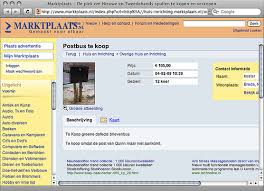
Such websites sometimes make 150 to 200 victims in a week. LMIO police officers are investing extra capacity in the coming festive months to detect and get these rogue websites offline as quickly as possible. This will involve cooperation with other parties who are also committed to eliminating and reducing this form of fraud. Together with banks, quality mark organizations, SIDN, Fraude Helpdesk, but also with radio and television programs such as Kassa, Radar and AVROS Opgelicht, the LMIO is taking up the fight.
Too good to be true
It is quite difficult to tell if you are dealing with a rogue online store. If something is too good to be true, it often is. Very low prices often indicate a rogue store. Make sure you have done everything possible to avoid becoming a victim.
There are several ways to prevent this. It is important to google the store in advance and make sure you know where you are buying something. There is often information about a webshop on various forums. If money has to be transferred to a normal bank account, you have to be alert. With a web store this is unusual. Paying via iDEAL is safe, but does not guarantee that you will receive the product you ordered. This payment method can be abused. Paying by credit card sometimes costs a little more, but if it goes wrong afterwards you often get your money back. If you have the option to pay afterwards, then of course you are not at all at risk.
Also important to check is how long a Web site has been active. If a website has been registered very recently, this is often an indication that something is not right. You can check this at www.SIDN.nl if a webshop (domain name) ends in .nl and at www.who.is if a webshop (domain name) ends in .com. More tips can be found at;
Doubts
Anyone who has doubts about the reliability of a vendor or website can go to www.politie.nl using a bank account number, e-mail address or telephone number, among other things, to check whether the police have received any reports about it (https://www.politie.nl/aangifte-of-melding-doen/controleer-handelspartij.html) Victims of Internet fraud can go to www.politie.nl to report it.
LMIO
More than 46,000 reports were received at the police's National Internet Scam Reporting Point (LMIO) in 2016. LMIO's annual figures show that victims were scammed for an average of 200 euros, bringing their total losses to nearly 9.2 million euros.
Presumably, the actual number of victims of Internet scams is twice as high. Although not every report leads to a criminal investigation, it still makes sense to report every scam to the LMIO. Despite more reports coming in than can be investigated, the LMIO can thwart scammers in other ways. For example, a scammer's account number is passed on to the bank, which, in the event of multiple reports, blocks the scammer's account.
Payment data is also passed on to payment services such as Payment Service Providers, for example: these are the Internet checkouts that are located between the consumer and the (fraudulent) merchant.
Catcatchers
To stay out of sight of the police and avoid problems with the bank themselves, many scammers use so-called cat catchers, people who make their bank accounts available for a fee. The money that victims transfer to these accounts is withdrawn by so-called cashers on behalf of the actual fraudster.
Although catcatchers and cashers are not guilty of fraud, they are at great risk. They too are guilty of a criminal offense, namely money laundering. The catcatchers and cashers are the first to be seen by the police and thus run a high risk of being caught and prosecuted.
Moreover, for the catcatchers, they are often no longer accepted by any bank and thus cannot bank.