Banks are taking increasing measures to deal with fraud involving stolen bank cards and phishing. However, cybercriminals are becoming increasingly sophisticated and successful in convincing victims to transfer money to their bank accounts themselves. Thus, the total damage resulting from bank helpdesk fraud will rise to 47.6 million euros in 2021. This is according to estimates by the Dutch Banking Association (NVB).
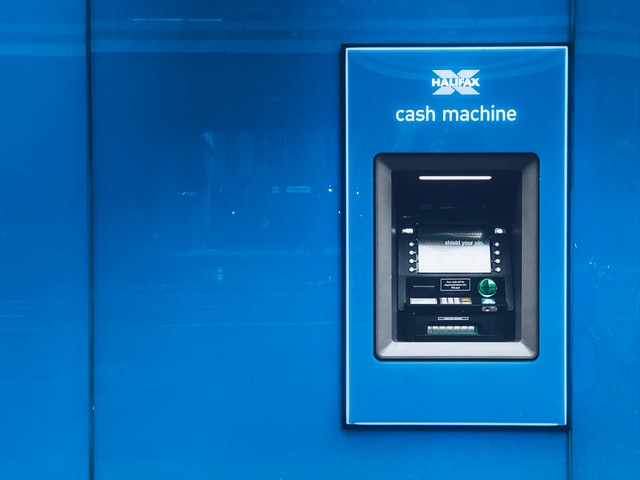
Help desk fraud is a form of fraud that is becoming increasingly common in the Netherlands. In this, a fraudster poses as a customer service employee, for example a financial institution. In this capacity, he approaches unsuspecting victims saying that "suspicious activity" has occurred in their bank account. The fraudster pressures the owner by telling them that immediate action must be taken to secure their money.
By temporarily transferring his savings to a "safe account," his money is safe. In reality, no such account exists at all, and the victim transfers his hard-earned pennies to the scammer's bank account. By the time he finds out, the harm is done.
In most cases, the victim could whistle for his pennies. Sometimes the bank showed leniency and compensated the victim's damages. Not all victims were so lucky and missed out. The fact that some banks were more generous than others led to angry reactions.
Together with the Minister of Finance, banks agreed on a joint approach. Since the beginning of last year, banks have provided the name and address details of fraudsters if they do not return the money to the account of the victim within a foreseeable period of time.
Some conditions do apply: for example, the victim must first report the crime to the police. Then the swindler is given three weeks to return the money. If he does not do so, the victim is given his name and address to start a civil procedure.
To reduce the number of fraud victims, banks have taken all kinds of measures. And they were successful, according to the Dutch Banking Association. Last year, the number of victims due to stolen bank cards and phishing was much lower.
However, losses due to bank help desk fraud rose to 47.6 million euros. This is because cybercriminals were more successful in encouraging their victims to transfer money to them. The total damage from all kinds of payment fraud, rose from nearly 50 million euros in 2020 to 62.5 million euros last year.
Aleid van der Zwan, deputy director of the Dutch Banking Association says online fraud has a huge emotional impact on victims. He says his organization is constantly taking measures to prevent fraud. "That works well for forms of fraud such as phishing, where criminals try to gain access to the customer's banking environment. But when customers are persuaded to transfer money themselves, it is more difficult for the bank to recognize fraud."
To warn people about cybercriminals and Internet scammers, the Dutch Banking Association is launching a public campaign later this year. "Also, pending a government-coordinated approach, banks are seeking cooperation with the police, telecom providers, social media platforms and other parties who can help prevent these forms of fraud," Van der Zwan explained.
The top executive stressed that a bank never asks to transfer money to other accounts. Not even in an emergency. If you are approached by someone pretending to be a bank employee, hang up, click away and call your bank. Did you fall for it unexpectedly? Always report this to the police.
Finally, Van der Zwan refers to the website veiligbankieren.nl. There you can find more tips on how to guard against bank helpdesk fraud. In addition to all major Dutch banks, organizations such as the Autoriteit Consument & Markt ACM), the Fraude Helpdesk, Betaalvereniging Nederland and the Consumentenbond also contribute to this site.