The tax authorities will use license plate scanners to check whether motorists pay sufficient taxes. This is contained in a bill proposed by State Secretary Snel (D66) of Finance.
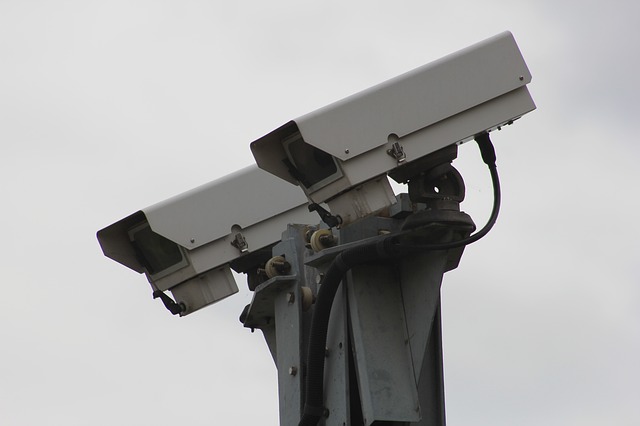
The Motor Vehicle Tax Act will have an additional article 77a regulating that the tax authorities may use a camera to enable "supervision and enforcement of this law." For this purpose, the tax authority records "the license plate number, location, date and time of capture and photo capture of the motor vehicle."
Within a maximum of seven days, the data are automatically compared with other data the tax authority has. As soon as a difference is found there, the tax authority will process the data further in order to be able to impose an additional tax assessment or a fine, for example. The data in which nothing striking is found will be destroyed after the comparison.
The tax department is yet to come up with a camera plan that will specify the exact number and locations of the cameras. In any case, the service will use the police's 800 license plate recognition cameras, but it will also commission four of its own inspection cars with a camera. License plate scanning could be deployed by January 1, 2019.
The camera plan is not yet known, but the response from the Autoriteit Persoonsgegevens is already available. The regulator requires that the necessity and proportionality of the cameras to be set up be explicitly tested (pdf) when the camera plan is drawn up.
Supreme Court
The tax authorities previously used license plate cameras to check whether motorists were paying their taxes. However, the Supreme Court ruled that the tax authorities did so without a legal basis for doing so. The Supreme Court ruled that it involved "the systematic collection, recording, processing and storage for years of data on the movements of vehicles in various places in the Netherlands" and "not one or a few observations in public spaces."
The tax authorities are reading into this the possibility of being able to deploy license plate scanners when it comes to checks based on "one or a few observations." This bill now creates that legal basis.
Not only did the IRS use the license plate cameras unlawfully, according to the Supreme Court, the agency "forgot" that data that is no longer needed must be destroyed. Millions of license plate photos were found to have been improperly stored by the tax authorities for years.
Sliding scale
Critics, including Privacy First, fear a sliding scale. "Everything about this law seems like a stepping stone to more surveillance with cameras. It may be used for goal A now, but you'll see that eventually goals B through Z will be added."
Indeed, the tax authorities confirmed to RTL News that they are currently looking at whether private use of leased cars can also be monitored with the license plate scanners.