The European Union wants to strengthen the data economy in the agricultural sector over the next decade (1). Data collection is to be improved, which would reduce the administrative burden on the farmer. But it is precisely with this trade-off that the farmer has lost his grip on his farm's data in the past. In addition, amid the nitrogen crisis and the uncertain agricultural future, it remains to be seen what happens to farmers' farm data.
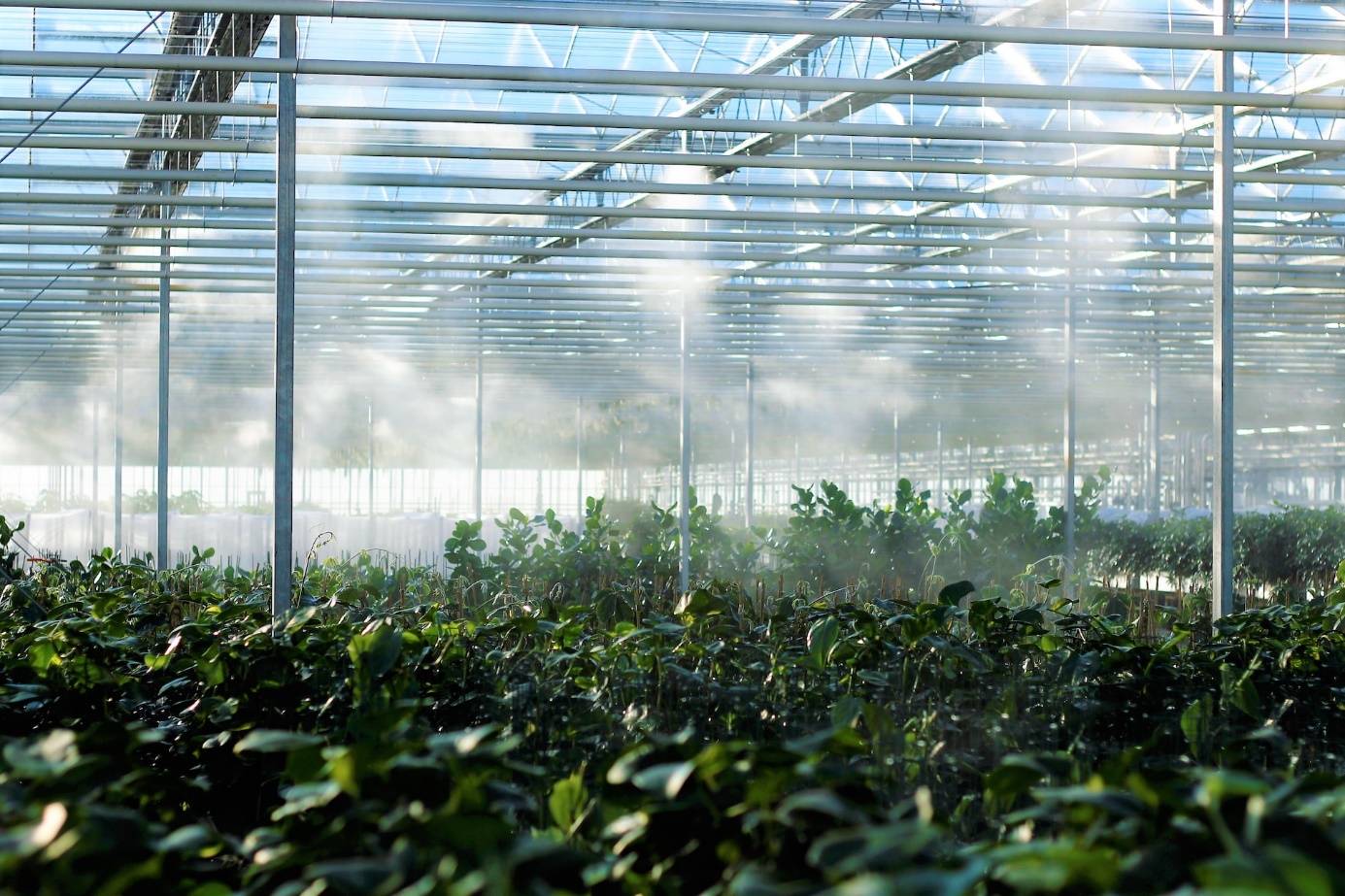
In 2020, the European Commission unveiled its plans to create a Common European Agriculture Data Space, facilitating Europe-wide sharing of agricultural data. The Data Space should improve economic performance of farms and their impact on the environment. In addition, the Data Space also provides an opportunity for policymakers to make more informed decisions.
Recently, the European Parliament and the Council announced additional initiatives, including the amendment of a regulation on the "Farm Accountancy Data Network" (FADN). The FADN consists of a database of economic and accounting data collected annually from a sample of tens of thousands of farms across Europe. Now environmental and social data are being added under the 'Farm Sustainability Information Network'(IDL). The revised regulation aims to improve data collection and thus reduce the administrative burden on the farmer. (2)
PONT talks about it with Robbert Cazemier. He works as a data protection officer at JoinData to make farmers' privacy-sensitive data streams more secure. JoinData wants to ensure that farmers regain power over their data. This ranges from financial data streams to parcel information and milk quality data to soil samples. ''If you look purely at a farmyard, there are many different types of data streams,'' Cazemier says. ''We actually make sure that the data around the farmyard is distributed in a secure way. We do that with security mechanisms and an authorization register for sharing data. Previously, that was really all just done on the basis of a piece of paper or a contract.'' JoinData ensures for some 15,000 farmers and growers that their data is processed securely.
Digitizing data streams can also be cost-saving for farmers. Cazemier: ''Data buying parties, such as accountants, benefit from digitizing and automating data streams. With automated processing, such a party has to perform fewer operations, leading to more efficient operations. So it could be that accountants say: if you automate, we can charge less.''
In addition to cost savings, agricultural data can make a lot of money, especially when data from different farms come together. Especially for processing agribusinesses, certain data are very interesting. ''As a feed manufacturer, for example, you want to know what the yield is from your feed,'' says Cazemier. ''Another example is a better milk price. If a dairy farmer can demonstrate to the customer that he uses a certain production method, he can earn more on his milk price through an add-on. That can eventually add up to a significant amount.'' Thus, there are often financial benefits for farmers when they share data.
According to Cazemier, the problem is that farmers do not know what happens to their data after they hand it over. ''So there are many parties interested in the data, but it is not transparent what revenue models are behind it. For example, a data buying party can benchmark with milk data from multiple farms and turn that into a revenue model. We now slowly see a shift occurring where the farmer thinks carefully: 'Why would this party need my data?'
The farmer, in terms of data, has long been unburdened. Because of this relief, the farmer has lost control of his data. ''These have all been interests to make it easier and less costly for the farmer, but now you see that it's not clear where this data is still floating around,'' Cazemier says. ''Farmers don't know who has had access to it."
A farm business is also different from many other businesses in that respect, according to Cazemier. ''The amount of data farmers share with parties is quite substantial. Any other business does not share nearly as much information. The farmer is not very aware of that.'' In addition, they are less protected privately. ''A farm is often a sole proprietorship and not a legal entity like a BV. As a result, residential addresses and private data, as with influencers, for example, can often be found more quickly.''
Sharing agricultural data with governments has also been happening for some time. ''From the government it is mainly legal requirements that farmers have to meet, such as demonstrating that they have used certain pesticides,'' says Cazemier. ''But policymakers don't always have an affinity with the practicalities of the farmyard, because they don't always have an agricultural background or a good understanding of what's going on in the field.'' In addition, farmers are left wondering whether they can still exist tomorrow.''
Dutch farmers have lost faith in the government because of the nitrogen crisis. Like the PAS reporters who, after voluntarily reporting a nitrogen calculation, were exempted from permit requirements. This arrangement was later found to be in violation of the European Habitat Directive and, through no fault of the farmer, the companies appeared to be operating illegally. Cazemier: ''There is suspicion surrounding environmental data. Farmers are reluctant to share data that could knock them around the head. They start to wonder what it means if the government has current insight into sensitive environmental data such as nitrogen emissions.''
European digital initiatives, such as the new IDL, are thus sensitive. It is now up to the European Parliament and the Council to work out the details, such as exactly which data categories will be collected. The European data-sharing system is voluntary, but European member states are allowed to provide incentives to encourage company participation.
It is also important for farmers that individual data are not used to deploy additional controls. ''That would take away the incentive to participate,'' said Klaas Johan Osinga of interest group LTO Nederland. ''The individual data will not go to governments or controlling agencies.''
The European Code of Conduct for Agricultural Data Sharing states that trust should be central to large-scale initiatives such as the IDL and the Agricultural Data Space. In principle, farmers are willing to share their data as long as they can see the added value and risks for their farms(3). Osinga agrees that farmers want to get rid of administrative burdens but for initiatives like the Data Spaces ''[...] this added value has yet to be proven.''
Farmers seem to be slowly becoming aware of what their data is being used for and see benefits especially when data can help reduce administrative burdens and costs. However, farmers are suspicious of the government when it comes to sharing environmental data. But the amended European regulation does not seem to pose a problem for the time being, because it works on a voluntary basis and individual data may not be used.
1 https://digital-strategy.ec.europa.eu/en/policies/digitalisation-agriculture
2. https://www.consilium.europa.eu/nl/press/press-releases/2023/06/29/farm-sustainability-data-network-council-and-parliament-reach-provisional-political-agreement/
3 https://fefac.eu/wp-content/uploads/2020/07/eu_code_of_conduct_on_agricultural_data_sharing-1.pdf