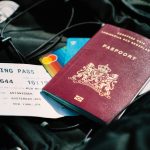
The Dutch police manage a database that is full of photos of foreign people who come to work, study or apply for asylum in our country. In total, there are 8 million photos of at least 6.5 million people who come from outside the EU. The Ministry of Justice and Security says that legally everything is well regulated, but experts think otherwise.

This is according to research by RTL (1) News.
Expats, foreign students and asylum seekers from outside the EU are required to present visa or residence permits if they want to stay in our country for an extended period of time. These documents include a passport photo. This photo ends up in a facial database and is used for CATCH, the police's facial recognition program. Should something occur, officers may consult this database to see if they can identify the suspect.
The story is curious for two reasons. First, the people whose photos are included in the police face database know nothing at all: in fact, they are not informed about this when they apply for residence documents. Second, they are not suspected of anything, but their photos end up in the database anyway. What is all the more remarkable is that in addition to this face database, the police maintain a second one. It contains 2.7 million photos of over 1.2 million Dutch and foreigners.
Finally, the passport photos from the database have been used by the police for years. As far as we know, the system is not being cleaned up. It is therefore questionable whether this is all acceptable.
The Ministry of Justice and Security claims that legally everything is in order. The law describes under what circumstances police may consult immigration records to examine fingerprints. The same principle agents apply to passport photographs.
Furthermore, the police may only search the facial database with the permission of the examining magistrate. The latter checks whether a criminal investigation is proceeding lawfully. Last year that happened twice. "That shows the restraint of use," a police spokesperson told RTL News.
He says agents adhere to strict conditions and do not take the facial database lightly. He further emphasizes that not just anyone ends up in the face database. "The police do not need a database of everyone's faces. Moreover, there is no legal basis for that," the spokesman said.
Experts think the police are too short on that argument. Evelien Brouwer, associate professor of law, migration and technology at Utrecht University, says the police are stigmatizing innocent expats, students and asylum seekers from outside the EU. "They are treated a priori the same as suspects. This is discrimination," she says.
Heleen Janssen, a lecturer in information law at the University of Amsterdam, doubts that the legal basis cited by the police is correct. "The law specifies exactly what the police may use. Faces are really not the same as fingerprints. It is problematic that the ministry does see it that way," Janssen said.
The Autoriteit Persoonsgegevens, which previously sounded the alarm with the ministry about this, also questions the police's approach. After all, a profile picture is not comparable to a fingerprint. Looking at someone's face reveals much more information than a fingerprint. You can deduce someone's gender, but possibly also their age, origin, religion and health. In doing so, people from outside the EU do give up a lot of their privacy (2). The question is whether that is allowed.
https://www.rtlnieuws.nl/nieuws/nederland/artikel/5361083/miljoenen-pasfotos-van-onschuldige-buitenlanders-gezichtendatabase
https://www.vpngids.nl/privacy/social-media/wat-weet-instagram-over-mij/