Enforcement request to Autoriteit Persoonsgegevens over three new privacy violations.
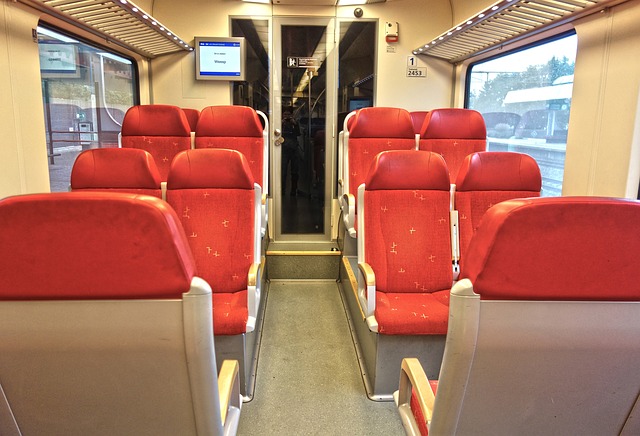
Following three new attempts by Dutch Railways to violate train passenger privacy, NS customer Michiel Jonker filed an enforcement request with the Autoriteit Persoonsgegevens this week. It concerns:
Denying the refund of remaining balance on anonymous public transport chip cards if the holder does not provide NS with his name and address information;
Denial of international train tickets by NS employees at station counters if buyers do not provide NS with their name and address information;
Charging, since July 2, 2018, additional "service fees" when holders of anonymous OV-chip cards pay cash to top up the balance on these cards.
Since July 2014, Dutch Railways (NS) has previously attacked the privacy of Dutch train passengers in various ways. These included:
Discriminating against holders of anonymous OV-chip cards in benefit hours;
Demanding de-anonymization of anonymous OV-chip cards when NS provides service (e.g., money back in case of delay);
Applying two unique card numbers to each anonymous OV-chip card, thus compromising the anonymity of those cards.
As a traveler who wanted to maintain his privacy, Jonker repeatedly requested that the Autoriteit Persoonsgegevens (AP) investigate these violations and take enforcement action. Jonker already won several lawsuits about this against the AP, which initially refused to even investigate the reports.
The recently enacted General Data Protection Regulation (AVG) will play an important role in NS' assessment of new violations. Another issue that will take center stage is the right to pay with cash as legal tender that also protects privacy.
Jonker: "In all these cases, the question is whether users of Dutch public transport are entitled to real, effective protection of their privacy. That question is more topical than ever when you see how people are treated in situations where privacy is not adequately protected. One can think not only of China with its Social Credit Score, or the United States with its "No Fly" lists, but also of European countries in which laws have been passed in recent years that allow authorities to spy on travelers who are not suspected of any criminal or risky behavior. For example, France with its permanent state of emergency and the Netherlands with the Sleep Act."
Jonker is also supported in this new case by Stichting Privacy First and Maatschappij Voor Beter OV.