The National Security Agency (NSA) has spied on several European allies for years. These include the Netherlands, Germany, Poland, Norway and Sweden. To accomplish this, the U.S. intelligence agency entered into a cooperation agreement with Denmark. So writes Danish public broadcaster DR based on an anonymous whistleblower, from the Danish military service Forsvarets Efterretningsjeneste (FE). Several sources confirmed the reports on the subject to the broadcaster.
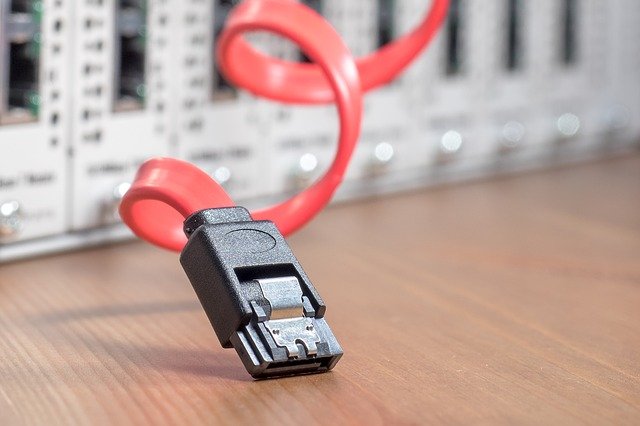
The NSA and FE agreed in 2008 to tap Danish Internet cables so that Danish intelligence agencies could do their work. In doing so, the intelligence and security services asked the Americans for technical and financial assistance. In exchange for this support, the NSA was allowed to tap the cables to gather intelligence on mainly Eastern European countries. The U.S. and Denmark jointly processed the collected data in a data center located near the Copenhagen airport. NSA employees regularly traveled to Denmark to build the "state-of-the-art" data center.
What the Danes did not know was that U.S. intelligence abused the cooperation to eavesdrop on Denmark and surrounding countries. Countries such as Germany, Poland, France, several Scandinavian countries and the Netherlands were thus secretly spied on for years by the NSA. Exactly what information the Americans gathered is unknown.
According to the whistleblower cited by Danish Public Broadcasting, a former FE employee, the NSA relied on the infamous Xkeyscore eavesdropping program to gather intelligence. Edward Norden, whistleblower and former NSA employee, told of the existence of this program in 2013. The NSA used so-called selectors to search emails and instant messages. A selector could be an e-mail address, but also a phone number, residential address or IMEI number of a smartphone. These selectors were used to store relevant metadata.
The FE whistleblower discovered that certain selectors were used by the NSA to covertly gather intelligence on European processes and organizations. He shared his concerns about the illegal practices through an internal report. When nothing happened with that, he leaked the confidential reports to the Danish regulator. The latter investigated the matter and concluded that some of the selectors were illegal. The report led to several FE officials being suspended last summer.
One of the targets the NSA deliberately spied on was the Danish defense company Terma. That company was involved in purchasing a new type of fighter jet in 2015 and 2016 to replace the F16. At the time, the Danish government hesitated between the American-made F35 (also known as the Joint Strike Fighter or JSF) and the Swedish fighter Saab-Gripen. In the end, the choice fell on the F35. What information U.S. intelligence gathered from the Danish defense company, what it wanted with it, and whether it contributed to the eventual choice of the JSF is unknown.
According to DR, the Treasury Department and the State Department were also bugged with Xkeyscore.
The whistleblower suggests in the report that Dutch agencies were also bugged with the Americans' spying program. De Volkskrant delved into the story. Despite its good connections at the Dutch intelligence services, the newspaper did not succeed in finding out what information the NSA has been collecting all these years.
The Dutch intelligence and security services would not confirm to the newspaper whether they were aware of this. "Everyone spies," an employee responded in a sober tone to De Volkskrant.
Dutch intelligence services are primarily engaged in espionage investigations of hostile state actors such as Russia, China, Iran and North Korea. A spokesman for the Intelligence and Security Services Regulatory Commission (CITVD) tells De Volkskrant that contacts with foreign regulators are good, but specific information from internal reports are not shared with intelligence agencies of allies due to its confidential nature.