Last Tuesday, TikTok sued the United States federal government in response to the bill potentially banning the app in the country. Last month, US President Biden signed the proposal and the Senate agreed to it. The popular social medium is protesting the decision to avoid having to choose between a divestment of the parent company behind TikTok and a national ban in the United States.
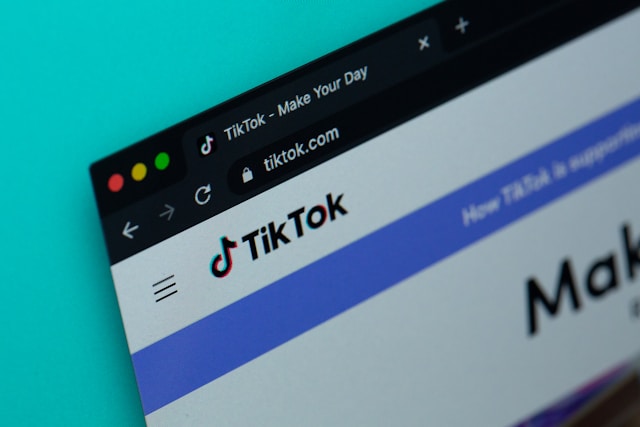
In April, the U.S. Senate agreed to a possible ban on the Chinese video app TikTok (1). The globally popular TikTok has nearly 150 million users in the United States: its largest user base. The U.S. government is seeking an ultimatum with a new law: TikTok's owner, the Chinese company ByteDance, must sell its shares in the U.S. portion of the app, or the app will be banned in the country.
The law and the nationwide ban it may cause violates the First Amendment of the United States, TikTok argues. It goes against freedom of speech. That, then, is the ground on which TikTok is building the suit. Selling ByteDance's stock is realistically impossible. This makes the ban, according to the video app's complaint, a coercive measure to silence the many TikTok users in the US.
Although specialized lawyers suggest that TikTok's charge based on freedom of speech stands strong, there is another angle to consider. For example, Gautam Hans, associate clinical professor of law, tells WIRED (2) that the company could possibly be seen as a threat to national security.
TikTok has strong connections to China, particularly through its Chinese owner ByteDance. China has a government that is cracking down on Internet censorship with its Great Firewall. Media, businesses and residents must all comply with government regulations. The country has also often been accused of actively spreading propaganda.
ByteDance's connections to China could mean that the Chinese government has access to the data of millions of American users through the app. Although TikTok has always denied this allegation, there remains fear among Americans that the Chinese government is exerting international influence unseen through TikTok, posing a risk to U.S. national security.
TikTok is regularly at the center of discussions about online safety, privacy and (political) censorship, including within the Netherlands. For example, in 2023, Dutch members of parliament massively removed the app because of privacy risks (3) and in 2021 TikTok had to pay a fine from the AP for illegally processing data of Dutch children (4). More background information can be found in our articles on TikTok's privacy risks (5) and bypassing TikTok bans (6).
In the current situation in the United States, freedom of speech and protecting national privacy are diametrically opposed. The process triggered by TikTok's indictment is likely to take a long time and set a precedent for future cases. Whether TikTok will actually be banned in the United States in January 2025 will not become clear until later.
https://www.vpngids.nl/nieuws/amerikaanse-senaat-stemt-in-met-verbod-op-tiktok/
https://www.wired.com/story/tiktok-ban-lawsuit-government-first-amendment/
https://www.vpngids.nl/nieuws/kamerleden-verwijderen-tiktok-om-privacyrisicos/
https://www.vpngids.nl/nieuws/tiktok-krijgt-boete-van-750-000-euro-van-ap/
https://www.vpngids.nl/privacy/social-media/tiktok-privacy/
https://www.vpngids.nl/unblock/censuur/toegang-tiktok/